Friday, June 18, 2010

There Will Be Blood Most Famous Celluloid Father And Son


Susan King of the Los Angeles Times has written a feature in time for Father's Day which explores some of the more memorable father and son relationships in film.  There Will Be Blood is the first on their list.

There is often a lack of communication between fathers and sons. And that's quite literally what happens between an ambitious oil man and his adopted son in Paul Thomas Anderson's award-winning 2007 loose adaptation of Upton Sinclair'snovel "Oil!" 
A deep rift occurs between oil tycoon Daniel Planview ( Daniel Day-Lewis in his Oscar-wining role) and his young adopted son H.W. (Dillon Freasier) after H.W. loses his hearing in an oil derrick explosion. Instead of comforting H.W., Plainview leaves the hysterical young boy and rushes off to the disaster. After the boy tries to burn the bed in which his father is sleeping, Plainview sends him off to a boarding school for the deaf. The relationship never recovers, especially since Plainview won't learn sign language.

You can check out the entire list which also includes the likes of the Godfather, Fantastic Mr. Fox, Star Wars and coming in at #15 was a page for great gift ideas for Dad linked up to e-commerce stores!

Thursday, June 17, 2010

"Hard Eight: Some Of The Best Reviews Of My Life"


John C Reilly was interviewed by the Onion's AV Club and was asked which of his 'smaller films' that he has been in that he felt didn't get the attention it deserved. His response:

JCR: Well, they all kind of find their way. They all kind of eventually percolate down and find the audience...Hard Eight, Paul Anderson’s first movie, which is really called Sydney, had some of the best reviews of any movie I’ve ever been in, and I think the shortest theatrical run. But as a result of Paul’s work, after that, he has definitely found an audience. I think just getting a movie done is an accomplishment in itself. It’s almost like a success that you’ve got the money to do it, and you made it, and it’s good.

Click to read the entire article in which the interviewer and Reilly don't seem to be getting along alot of the time.  In quick website news, the finished site will be uploading over the next day/s.

I apologize for the state of things the last while.

Wednesday, June 16, 2010

Join The C&RV Facebook Group

as a further way to try and grow the website back up to it's former glory, we are trying to recruit you and your friends on facebook. click here to join our facebook group and pass it along to others?

it would mean the world to us.

Thursday, June 03, 2010

"Renner 100% Out" Of The Master


I felt bad that Deborah Ann Woll didn't get a banner image.... Now, we will need to take this update with a grain of salt as it did not come directly from the horse's mouth, but the website SlashFilm says Jeremy Renner may no longer be involved with The Master because  the project's finances are not fully secured.
But there’s a shadow of bad news. Renner has recently seemed like a lock to play the second male lead in Paul Thomas Anderson’s The Master, but in the wake of Universal passing on the film, it appears that financing isn’t coming together. THR says “while he still has definite interest in Anderson’s film, that project is still cobbling financing and has seen its start pushed back several times."
Click to read the full article which also covers Jeremy's involvement as Hawkeye in Glee-alumni director Joss Whedon's take on The Avengers.

Tuesday, June 01, 2010

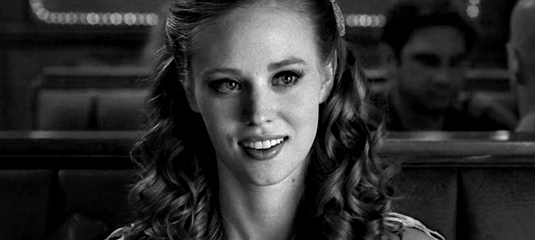
The Master: Amanda Seyfried, Emma Stone, Deborah Ann Woll


The latest rumors regarding The Master are that Emma Stone (banner photo competition winner) Amanda Seyfried and Deborah Ann Woll have been offered roles in the film. And yes, it is taken from The Playlist:

More details on the potential cast for Paul Thomas Anderson's forthcoming untitled Scientology drama are surfacing as it gears up for a shoot this summer. Last week we reported that Reese Witherspoon had been offered the role of the Master's wife Mary-Sue, who acts as his caretaker and vigilant lieutenant. This week, the print edition of Production Weekly reveals that Amanda Seyfried, Emma Stone and Deborah Ann Woll are all being considered for the role of Elizabeth, The Master and Mary-Sue's daughter.
We reviewed the script for the film that was floating around earlier this year and while the role of the daughter is a small one (though that could've changed), it also does have some pretty salacious bits (that we won't spoil here) which will be an eye opener for any fans of the actress who lands the role.
So who will land it? It's hard to say. Seyfried seems like least likely candidate only because she is set to shoot Catherine Hardwicke's "Girl With The Riding Hood" this summer and depending on when Anderson's film goes in front of cameras, scheduling alone could take her out of the running. Emma Stone has been looking to break out of comedic roles, most recently adding the period based, racial drama "The Help" to her upcoming slate. She would be an interesting fit for the role and it would definitely add something very different to her resumé. Finally, there's Deborah Ann Woll, best known for her role as Jessica on "True Blood." She doesn't have much feature film experience (well, she has roles in three films that are awaiting release) but she's capable, and from a purely financial aspect, probably the most budget friendly to join the $35 million dollar picture.
All this said, while the actresses are said to be "choices" for the role its unclear at this time if any offers have been made. Our guess would be they've all read or tested in some capacity but obviously, decisions are still pending. For now, the only confirmed cast members remain Philip Seymour Hoffman in the role of The Master and Jeremy Renner as Freddie Sutton, his troubled protegé. Frankly, those two could could go on screen and re-enact "Baby Geniuses" and we'd watch it, so whoever Anderson gets to surround them is icing on the cake. 

Monday, May 24, 2010

Mary-Sue played by Reese Witherspoon


Bam. The Playlist has another interesting rumor regarding The Master now saying an offer has been made to Reese Witherspoon to play Phil Hoffman's wife. Blockquotes:

Things have been pretty quiet on the Paul Thomas Anderson front and his new untitled religion picture, affectionately known as "The Master" by fans.

 
Loosely -- or not so loosely -- based on the life of Scientology founder L. Ron Hubbard (read our review of a very early draft of the script), we know that Philip Seymour Hoffman will play the messianic lead, Jeremy Renner will play Freddie Sutton, the drifter character that becomes The Master's right hand man, and we know that Universal passed on the project and River Road is footing the bill (the company that produced Terrence Malick's "Tree Of Life" and Doug Liman's "Fair Game"; Honcho Bill Pohlad is also an investor in distributor Apparition, so don't be surprised if the film ends up there).


Now comes a few more details from the latest issue of Production Weekly. According to their intel, Reese Witherspoon has been offered a role in the picture and the production is eyeing a June start date. 
Producing is John Lesher, Pohlad and Jo Anne Sellar.

 June is next week if it actually starts on the first. Could the production really be this ready to go and no one's really reported that yet? 

Zero further details are given, but we would assume that if Witherspoon takes a role, it's that of the Master's daughter wife Mary-Sue, who acts as his caretakers and vigilant lieutenant. 
Witherspoon is also attached to McG's "This Means War," which is supposed to start shooting in July, so that could be a potential conflict if she even agrees to the role (she's also currently shooting "Water For Elephants"). However, all of the daughters' roles in the draft that floated around earlier this year were pretty tiny. 
Sure, it was an early script and things must have certainly changed, but we can't imagine it's been completely deconstructed.

There is one small role of a prostitute who also hooks up with Renner's character, but that role, while reoccurring throughout, does feel pretty small too. 
Witherspoon can be pretty commanding when she needs to be -- her company is called Type A productions after all -- and some have joked she's not that far removed from the Tracy Flick character she portrayed in "Election," so we think she would be pretty good for the key daughter who oversees her father's business and best interests.

 
But again, it is just an offer. She could easily turn it down, there were some salacious bits with the daughter in that early draft, we'll just have to wait and see and hope this report uncovers more info.

Monday, April 26, 2010

"Renner 100% locked" into The Master


The Playlist - your primary source for all breaking news updates regarding The Master - is now reporting that Jeremy Renner is going to play Freddie Sutton. The score is now 3-1. In their words:

So one could argue that THR already confirmed this — and sites like us and Vulture were confused with their weird verbiage — and we'd be fine with that, but we've been told by a couple very good sources, what you've probably figured out already: Jeremy Renner is now 100% locked in to take the role of the drunken, existentially lost drifter, Freddie Sutton in Paul Thomas Anderson's take down of Scientology religion in a currently untitled film project, affectionately known to fans as "The Master."
An official announcement should be made soon. The question about funding and when this will shoot still needs clarification (River Road was last rumored to be footing the bill). We've heard the project will go in front of cameras "soon" (our guess is late summer/or the fall) but we suppose that despite Universal passing on the project, the film that now has Renner and stars Philip Seymour Hoffman as a surrogate for L. Ron Hubbard is moving forward (read more details in our thorough script review). More details as we get them 

Thursday, April 08, 2010

Freddie Not Played by Jeremy Renner


Despite two posts saying he was involved, The Playlist is now saying Jeremy Renner has backed out of The Master due to scheduling conflicts. Here is what they had to report:

After his critically acclaimed turn as Sgt. William James in Kathryn Bigelow's "The Hurt Locker," Jeremy Renner has found himself an interesting bunch of projects to potentially follow up with.
The actor first joined James McTeigue's upcoming murder mystery centering on Edgar Allen Poe's last days (described as "The Raven" meets "Se7en") but has also been linked to roles in Peter Berg's film adaptation of board game "Battleship" as well as a collaboration with auteur Paul Thomas Anderson and Phillip Seymour Hoffman on their untitled Scientology drama.
However, in a sidenote to Taylor Kitsch's casting in "Battleship" today, Renner has reportedly passed on Anderson's project with "scheduling conflicts preventing his involvement" — the same conflict also caused him to pull out of Berg's film. With "Battleship" scheduled to shoot this summer, it's not known what project is causing the issue though it could very well be McTeigue's "The Raven."
But wait, does this mean Anderson's religious drama is also shooting this summer despite it's studio woes? Have River Road stepped up to the plate after Universal passed? It had been thought such backing issues would cause the film's production to be delayed and open up the calendar for Renner but all this was, of course, before the other Renner project was slated to shoot at the same time.
Renner's exclusion from PTA's film is disappointing but may ultimately make things easier. His link had stirred a little controversy as his potential role, Freddie, was written as a young, impressionable 20-something drifter in an early draft. Our original script review had actually proposed "There Will Be Blood" star Paul Dano for the role, who is 14 years younger than Renner. Of course, there's also the possibility that the religious drama had undergone rewrites, after all, Renner had reportedly taken at least five meetings with Anderson.
Either way, we're sure this is just the tip of the iceberg to the story with details surrounding what's happening with Renner, "The Raven" and PTA's religious drama likely to hit soon if both are in fact set for summer shoots.

Thursday, March 18, 2010

"Everyone lies about their budget" LA Times

Los Angeles Times writer Patrick Goldstein ran into Paul Thomas Anderson recently and the encounter led to an article regarding films and their reported budgets called "Why Everyone Lies About Their Movie's Budget."

I was at PEN USA's annual Literary Awards Festival a few weeks ago, having a great time, hobnobbing with all sorts of illustrious writers, when I ran into "There Will Be Blood's" writer-director Paul Thomas Anderson, who was there to accept an award for his film script. A huge fan of his work, I told him how much I'd liked his movie. He nodded and shyly smiled, and I thought he might say something like, "Oh, geez, thanks for the compliment." What he really said was: "In that story you did, you got the budget wrong."
If I actually believed in New Year's resolutions, I'd happily promise to never write about a movie's budget ever again -- all it does is cause pain and misery, both for the press, which is always being spun by studio executives and producers, and for the filmmakers, who are always convinced that clueless reporters and columnists are wildly inflating their movie budgets. (It is safe to say that no one in the history of Hollywood has ever complained about the press underestimating the cost of his or her movie.) 
To be fair, Anderson wasn't all that angry. We went on to have a perfectly amiable conversation. But I'm sure he was unhappy, since when I made reference to his budget, which I said was in the vicinity of $45 million, I was making the point that his movie -- a dark, intense historical drama -- cost so much (along with the marketing outlays of Paramount Vantage's Oscar campaign) that it could never possibly make a decent profit.
The problem that journalists have in reporting about movie budgets is that nearly everyone they ask about a movie's budget tends to -- how do I put this nicely -- offer a whopper of an untruth. In other words, shock of all shocks, people in Hollywood lie. The studio chief who made the movie gives you a low-ball number. The head of a rival studio, eager to make a competitor look bad, gives you a wildly inflated number. Most journalists have reported that Baz Luhrmann's recent film, "Australia," cost $130 million. 20th Century Fox insists that it cost less, saying it received a hefty subsidy from the Australian government, knocking $30 or so million off that figure. But every rival studio chief I spoke to about the film said with great authority, as if they'd seen a host of internal Fox documents, that the film cost $170 or $180 or $200 million, just to throw out the three different figures I got from three different executives.
What's a reporter to do? Who tells the biggest whoppers? And how does one reporter use triangulation to figure out the real budget number? Keep reading:
I'm old-fashioned about reporting budget numbers. I like to go to the source. In other words, I try not to report a number unless I've gotten it from a top executive at the studio (or financing company) that made the picture or a producer or some other high-level member of the production team. You'd think this would work out pretty smoothly, but even then, I've discovered that budget numbers are a slippery business.
My colleague John Horn, who is something of an expert on movie budgets, since he is always writing about film profitability, reminded me of the legendary example of funny numbers involving Jeffrey Katzenberg and his DreamWorks Animation films. When "Shrek 2" was being released, Katzenberg (like most studio execs) was eager to make the film look as profitable as possible, so he didn't stop reporters from believing his movie cost a pittance. That's why Newsweek, in 2004, reported that the film's stars Mike Myers, Eddie Murphy and Cameron Diaz "got $10 million each to reprise their characters, which accounted for almost half the film's modest $70 million budget." But after DreamWorks Animation went public, its budget figures suddenly soared dramatically, with the company acknowledging that the original "Shrek" cost closer to $130 million, with its and other DreamWorks sequels costing "15 to 30% higher" than that.
Once burned, twice shy, which is why the showbiz media has a healthy skepticism about budgetary information from studio executives. Sometimes you get the feeling that you could ask five people who worked on a film to tell you the budget -- and you'd get five different answers. When I was writing about the unknown screenwriter who'd penned Clint Eastwood's "Gran Torino" last month, I reported that the movie (co-financed by Warners and Village Roadshow) cost $35 million. Warners immediately called to complain, saying my number was totally wrong. Rob Lorenz, a delightful guy who's one of the producers of the film -- and has worked with Eastwood for years -- asked how I could have possibly gotten such a wrong figure. Actually, I told him, I got the budget figure from Bill Gerber, who -- ahem -- was the other producer of the film, with Lorenz and Eastwood. Since Gerber had once been a head of production at Warners, I figured he knew what he was talking about. Lorenz told me the film cost closer to $25 million, so I amended the figure, saying the film cost "less than $30 million."
This happens all the time. I wrote in a recent post that Sam Mendes' "Revolutionary Road," a Paramount film produced by DreamWorks, cost $45 million. I didn't make up the number -- it's what a top executive at Paramount (which then owned DreamWorks) told me the film cost. As soon as the story ran, Stacey Snider, who runs DreamWorks, e-mailed me to say the film only cost $35 million. It seems unlikely that Paramount would inflate the cost of a film it financed and distributed, since if "Revolutionary Road" fails to find an audience, it will look like an ever bigger flop if it cost $45 million instead of $35 million. But I also trust Snider, who has a better track record than most studio chiefs in offering honest numbers. So what does the movie cost? Let's just say -- that's a work in progress. 
As you can see, assessing movie budgets is a skill that relies on instinct as much as actual reporting. Horn uses something akin to triangulation, i.e. the art of measuring from three different points of reference, the epicenter being where those lines intersect. As he puts it: "Ask three people without axes to grind, or reasons to lie, what a movie's budget is, and the average of those numbers can be a close approximation of the film's true cost."
When Horn was reporting on the budget of "The Curious Case of Benjamin Button" for his Word of Mouth column, he asked a few executives "close to Paramount" what the film cost. Two got back to him. One said $175 million. Another said $185 million. Horn ran the lower figure. Even so, the studio complained, saying that while the film's initial budget was in fact $175 million, incentives from Canada and Louisiana -- where much of the film was shot -- reduced the actual cost to $150 million. The Times published a clarification to explain why our original budget number was off the mark.
But right around the time that Paramount was upset that our "Benjamin Button" number was too high, I found myself on the phone with a studio boss who complained that our "Button" number was too low, saying, "You guys are so gullible. That movie cost at least $200 million." I guess that makes us damned if we do, damned if we don't. It makes for a frustrating experience all around. As a baseball junkie, I take pleasure in the sanctity of numbers. You know that at the end of game you can accurately calculate every player's batting average, based solely on his performance. Fudging isn't allowed. If a player's hitting .315, he's hitting .315. If he goes 0-for-4 in the next game, his batting average goes down. No explanation, no exception.
But movie budgets, like everything else about the business, are never black and white. In Hollywood, the numbers are a lot like the truth -- they are always subject to interpretation.